ARE 5.0 preparation strategy
Should You Study for ARE 5.0 PPD and PDD Together?
Compare PPD and PDD content, weigh combined versus sequential study, and decide how much focused preparation to leave between exam appointments.
Reviewed for the current ReasonSpan™ exam profile · Updated October 30, 2026Our answer: share the foundation, verify each division separately
Studying ARE 5.0 Project Planning & Design (PPD) and Project Development & Documentation (PDD) together can make sense, but studying together and booking closely spaced exams are different decisions. ReasonSpan™’s recommendation is to connect shared concepts, then give each division focused application practice and its own timed rehearsal. Choose the interval from the work you still need to do, rather than a universal number of days.
PPD and PDD overlap without being interchangeable. A strong system-selection answer does not automatically demonstrate that you can resolve a construction detail. Equally, knowing a connection detail does not establish that you can select an appropriate building configuration. The useful question is whether you can recognize the task and apply the right evidence.
What NCARB asks you to do
NCARB describes PPD in terms of preliminary site and building design, and PDD in terms of developing, integrating and documenting building systems and assemblies. The comparison below summarizes the published content areas. It does not imply that every question belongs to a rigid project phase or that PPD avoids calculations.
The percentages are NCARB’s published ranges for typical forms, not fixed allocations or a measure of how much the two exams overlap.
| PPD content area | Range | PDD content area | Range |
|---|---|---|---|
| Environmental Conditions & Context | 10–16% | Integration of Building Materials & Systems | 31–37% |
| Codes & Regulations | 16–22% | Construction Documentation | 32–38% |
| Building Systems, Materials, & Assemblies | 19–25% | Project Manual & Specifications | 12–18% |
| Project Integration of Program & Systems | 32–38% | Codes & Regulations | 8–14% |
| Project Costs & Budgeting | 8–14% | Construction Cost Estimates | 2–8% |
The same subject, a different decision
These are original study examples interpreting the objectives, not predictions of actual examination questions. Both divisions require technical reasoning, integration and attention to the stated conditions.
| Shared subject | A PPD application | A PDD application |
|---|---|---|
| Structure | Compare framing alternatives against span, depth, program and budget. | Resolve sizing, interfaces and coordination in the developed design. |
| Building envelope | Select an assembly suited to climate and performance requirements. | Trace air, water and thermal continuity through an opening or transition. |
| Mechanical systems | Compare systems and reserve equipment and distribution space. | Coordinate components, routes, clearances and construction information. |
| Codes | Evaluate the proposed building configuration against requirements. | Check detailed compliance and its representation in the documents. |
| Cost | Compare alternatives on a consistent scope and budget basis. | Check an estimate against the documented design and quantities. |
Do you need time to “unlearn” one exam?
The concern deserves a fair hearing. A candidate accustomed to detailed component work may spend too long calculating when a question asks for a design alternative. A candidate accustomed to selecting a suitable concept may overlook a missing interface, specification requirement or dimension in a documentation task. Familiarity with a shared topic can also conceal gaps in the other division.
We interpret this as a need to adjust problem-solving habits and distinguish the requested task, rather than discard correct technical knowledge. The building physics do not reverse between divisions; the supplied assumptions, required output and level of resolution may change. Read those conditions before deciding how deeply to calculate or document.
A deliberate transition period can help candidates practice that change of focus and recover from an exhausting exam. Waiting alone does not demonstrate preparedness. We do not claim that a particular interval, combined study or sequential study produces better ARE pass rates; the published objectives do not establish a universally best schedule.
Three reasonable preparation routes
| Route | When it can help | What to watch |
|---|---|---|
| Study both together | You have a workable foundation, adequate study time and can distinguish the tasks. | A wider workload can dilute attention to division-specific gaps. |
| Prepare one division at a time | You need concentrated instruction, have limited weekly hours or repeatedly confuse the tasks. | Shared knowledge may need refreshing before the second exam. |
| Shared foundation, separate final preparation | You want to connect systems knowledge while reserving focused practice for each appointment. | Maintain separate error logs and timed practice; one good result does not cover both divisions. |
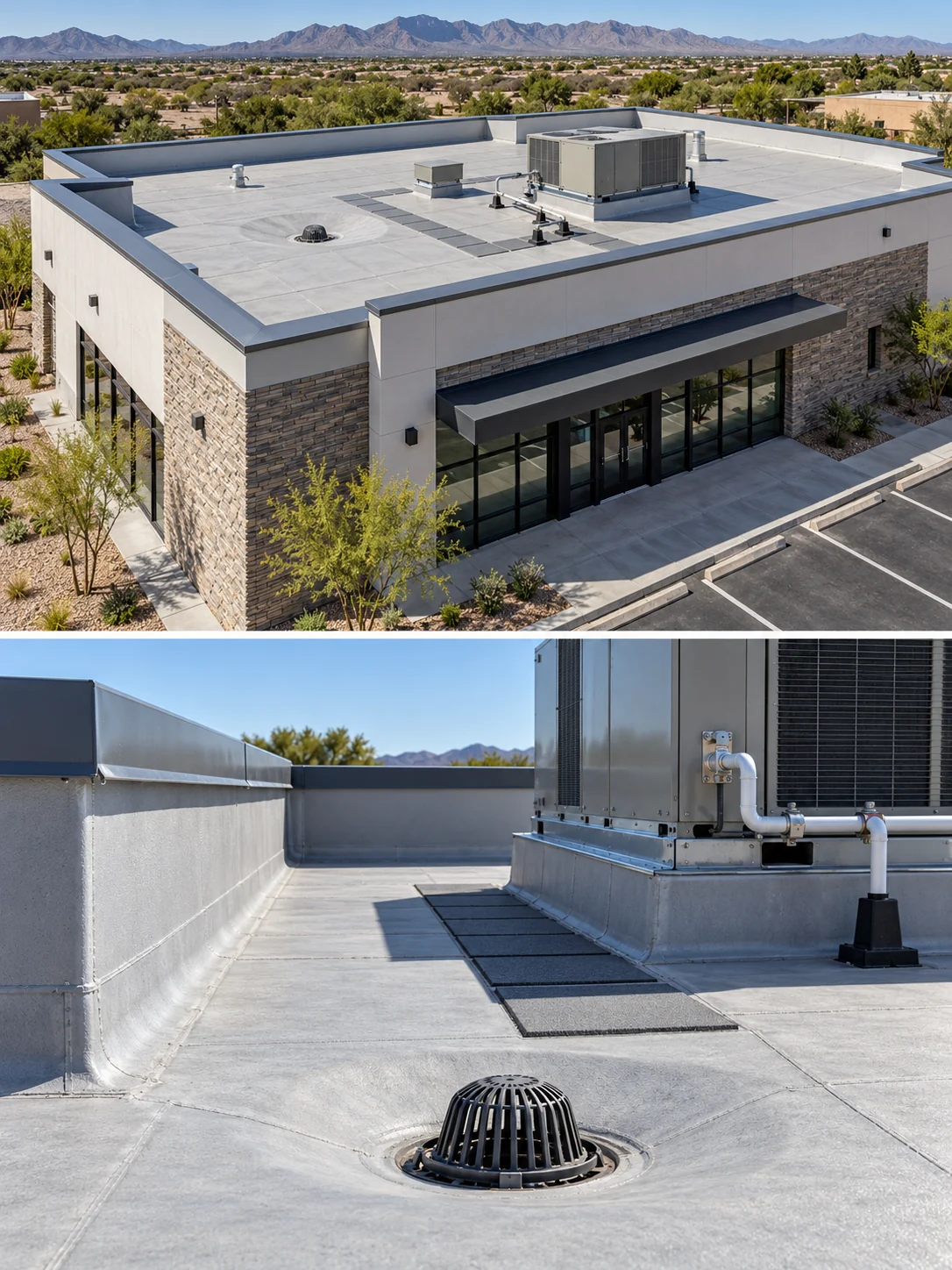
A roof example: carry the knowledge forward, change the question
For a PPD-style study task, compare two proposed roof assemblies against the supplied climate, thermal target, roof geometry, structural allowance and budget. Explain which alternative satisfies the combined criteria. Do not add unsupported product assumptions.
For a PDD-style study task using that selected assembly, examine the parapet, drain and equipment-curb details. Trace water discharge, air-barrier continuity, insulation transitions and interfaces with structure and services. Compare the details with the roof plan and specification, and identify information that must be coordinated.
The second task builds on the first without being answered by it. A suitable assembly can still be poorly detailed, and a neatly drawn detail can belong to an unsuitable assembly. In either division, let the actual prompt determine the checks required.
Build a shared study sequence with two separate finish lines
- Map your starting point to both sets of objectives. Use unfamiliar questions and NCARB’s free division-specific practice exams; record reasoning and time as well as correct answers.
- Study a shared subject, then work two different applications: one about selection or design integration and another about development or documentation. State what the question asks before solving.
- Keep separate PPD and PDD error logs. Identify missing knowledge, an incorrect model, a missed document relationship, slow resource navigation and unnecessary calculation separately.
- Before each appointment, concentrate on that division’s weaker objectives, resource tasks and timed work. Use fresh questions rather than immediately repeating remembered answers.
- After the first exam, allow for recovery and reassess the remaining division independently. Do not reconstruct protected exam content. Use practice evidence and available study hours to decide whether the second appointment remains realistic.
How much time should you leave between appointments?
Closer appointments may be workable when you can explain unfamiliar answers in both divisions, complete division-specific timed work at a sustainable pace and cover the remaining gaps before the next date. This is a planning judgment, not a passing-score guarantee.
Leave more time when documentation and specification work remain weak, site and design integration are underprepared, you repeatedly solve the wrong task, or work and personal commitments leave too few focused sessions. Fatigue, anxiety, affordability and appointment flexibility also matter.
Estimate the focused sessions required for the remaining objectives, add time for fresh verification and recovery, and compare that with your realistic calendar. There is no universal requirement to take PPD first or to schedule PDD a fixed number of weeks afterward. Check current NCARB scheduling and rescheduling rules before making a commitment.
Use ReasonSpan™’s books and programs for the task you need
The illustrated books develop physical concepts, assemblies and worked decisions. The online programs add guided study, practice feedback and timed rehearsal. Follow a missed concept to the relevant explanation, then test it on a different application. Match resources by subject; book and program numbering need not be identical.
For PDD, explore the illustrated book sample and the online program’s free previews before choosing a format. For PPD, use the public guides and available program preview. The full PPD program currently has invited pilot access with paid enrollment closed; the PPD book is in preparation. Check the linked pages for current availability. A planned release is not current purchase availability.
You do not need to buy both a book and an online program for the same division. Choose the format that fits how you study, and use official NCARB guidance and applicable references alongside it. No commercial resource or practice score guarantees passing.
Choose the sequence that improves your next decision
Our perspective is practical: connect the knowledge where it transfers, practice the distinctions where it does not, and make scheduling decisions from separate evidence for each division. Shared study can be efficient. Focused sequential preparation can be equally sensible when it addresses a genuine need. The aim is to prepare to pass each examination through understanding and application.
Sources and further reading
Exam requirements can change. Confirm current details with the organization that administers your exam and use the cited sources for the preparation principles summarized here.