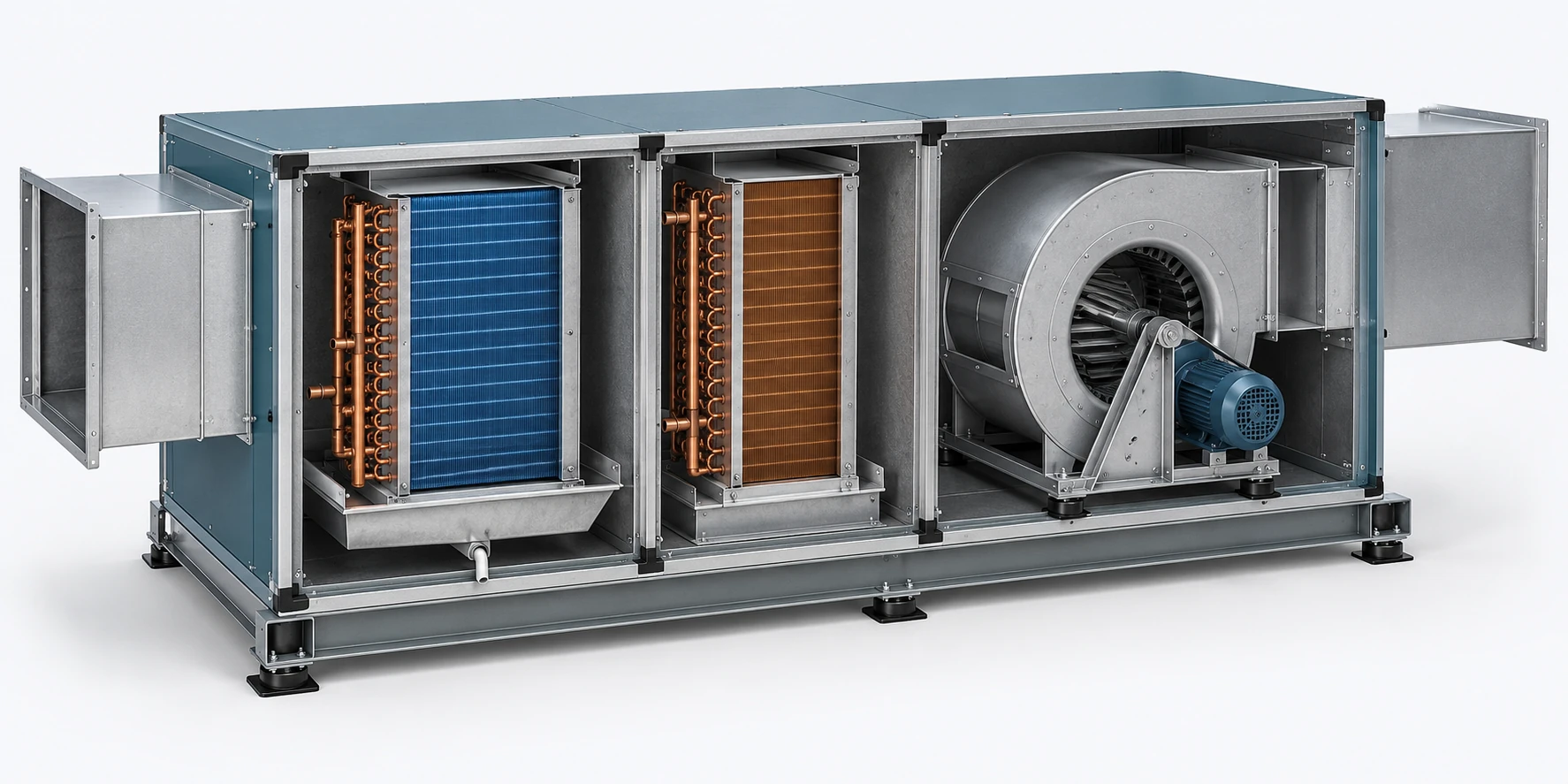
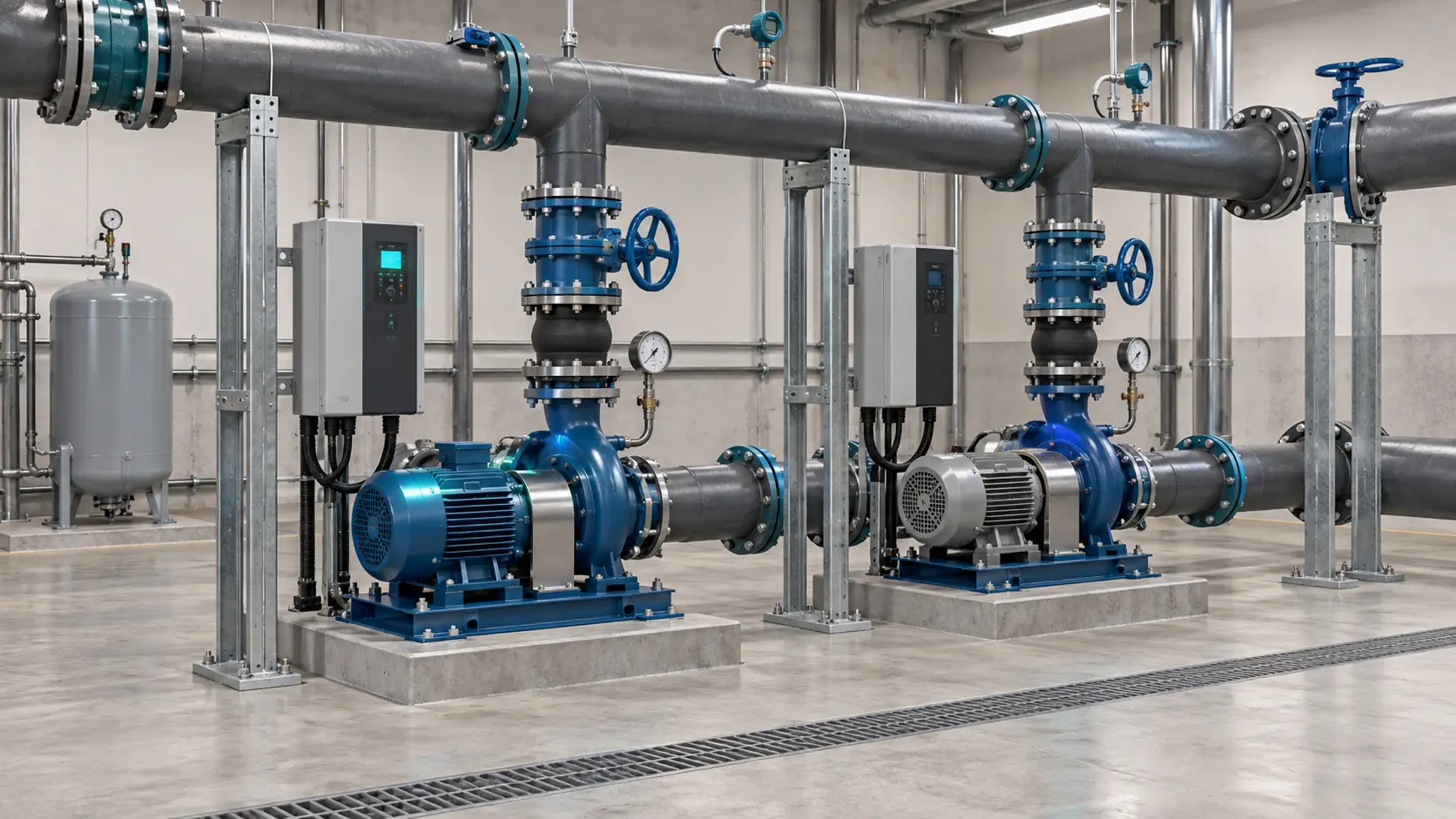
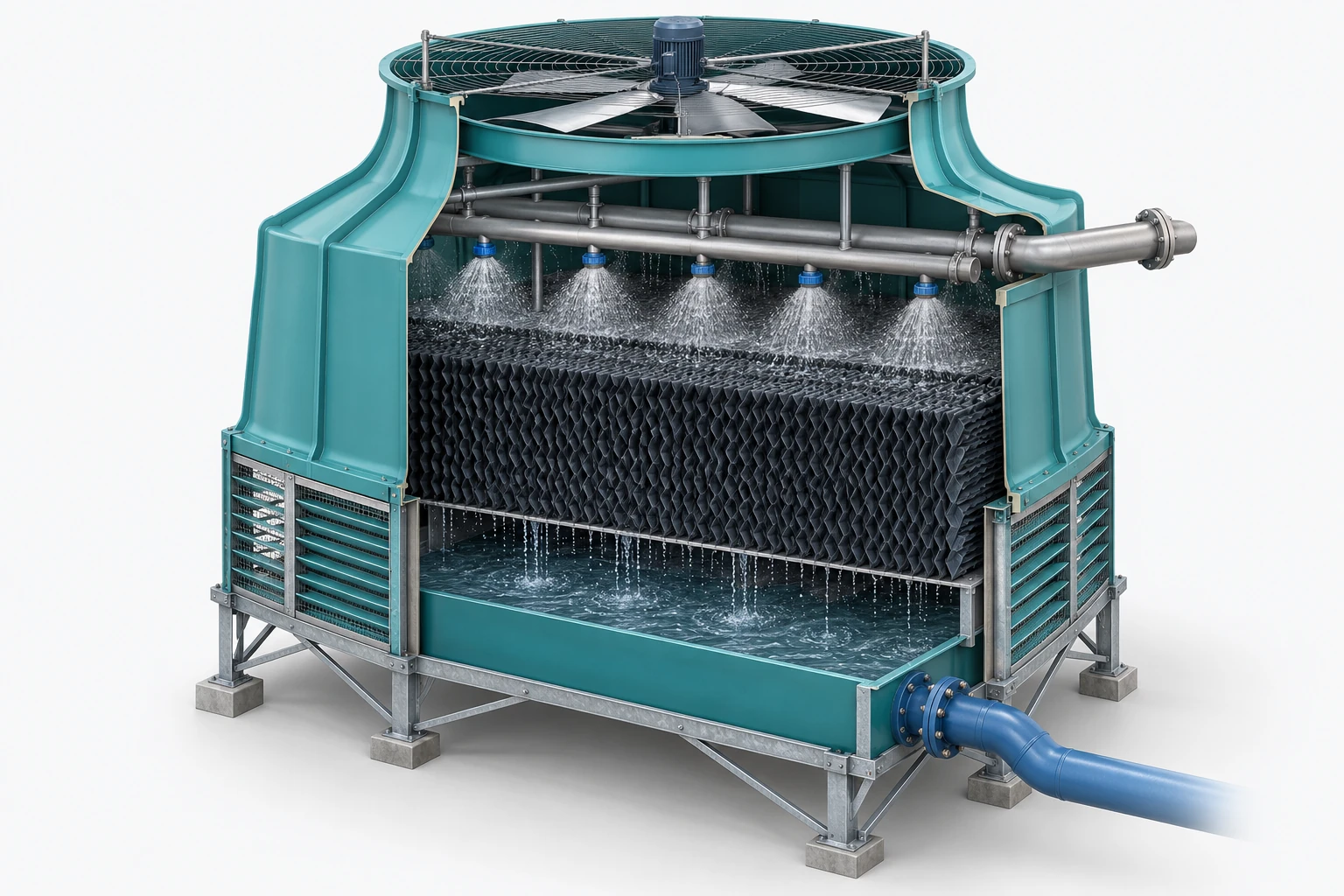
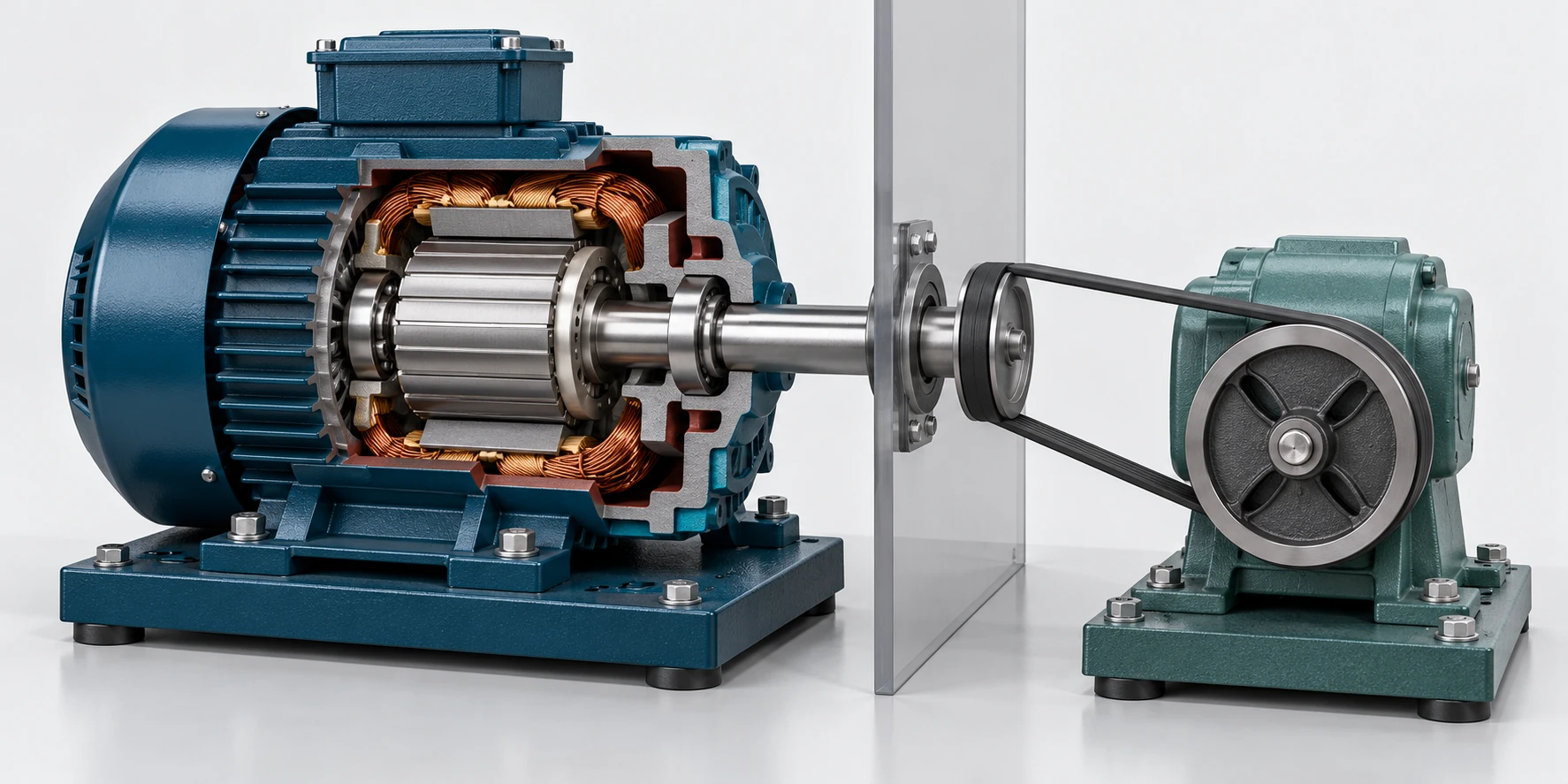
Read the evidence. Choose the method. Make the decision.
Connect psychrometric chart readings and equipment curves to the actual air path, energy boundary and system constraint.
Explore the original visual lessons and method cards below. Your existing program access includes 40 saved exercises, including 12 fresh transfer problems. Twelve response-format drills per program cover numeric entry, select-two, matching and graphic regions.
14.696 psia. This original orthogonal dry-bulb–humidity-ratio chart teaches the relationships; its geometry differs from the chart in your authorized reference. RH uses solid curves; other families use distinct line patterns.
How to read the chart and handle precision
Locate two independent known properties at the stated pressure. Interpolate between adjacent curves.
Read W horizontally; read dry bulb vertically. Trace the labeled enthalpy, volume or wet-bulb family as requested.
Sensible heating and cooling at fixed W move horizontally on this chart. Dew point follows the same W back to saturation.
For these authored exercises, aim for about ±1°F in temperature, ±0.0003 lb/lb in W, ±0.5 Btu/lb in h, ±3 percentage points in RH and ±0.15 ft³/lb in v. These are teaching targets, not NCEES grading rules. Errors in differences can be larger.
Wet-bulb curves are calculated as thermodynamic wet bulb. They are close to, but distinct from, constant-enthalpy lines.
Original authored teaching material. Use your authorized examination references to rehearse the actual chart geometry, search headings and listed standards for your exam.
Keep the method beside your answer.
The full exercise sequence is included with existing access to this program. Sign in to use your entitlement.
Cover the explanation and state the method in your own words. Revisit a card after a missed problem, then apply it to a fresh question.
Method 1
Name the boundary
What crosses the chosen boundary? What stays inside?
Draw the room, plant, branch or construction quantity boundary. Name where every energy, mass or load contribution acts.
Reveal a check on the reasoning
An indoor motor driving outdoor equipment contributes indoor losses, while exported shaft work dissipates elsewhere.
Method 2
Fix the quantity basis
Are these quantities comparable before you combine them?
Write units beside every input. Identify actual or standard airflow, dry-air or total mass, dry or moist soil and bank, loose or compacted volume.
Reveal a check on the reasoning
Actual cfm requires specific volume at the actual measurement state. Standard cfm uses its explicitly defined reference density.
Method 3
Find the governing constraint
Which requirement limits the proposed design?
Calculate independent capacity, safety or performance limits separately. Enforce all required lower and upper bounds.
Reveal a check on the reasoning
Minimum coil area is the larger independent airflow or thermal requirement. Parallel route losses are compared rather than summed.
Method 4
Read, estimate, then verify
What should the sign and approximate magnitude be?
Read chart labels and pressure first. Estimate before calculating. Preserve enough precision internally and report a justified result.
Reveal a check on the reasoning
A chart reading is an estimate. Do not distinguish answers more finely than the plotted scale supports; numeric training tolerances are exercise-specific.
Content quality and review
These original exercises have undergone internal technical and software checks. View the review scope, completed checks and remaining validation steps. Suggested working times are study guides.