Inside the ReasonSpan™ books
Understand the decision.
Prepare to pass.
Choosing a study book is a commitment of time as well as money. Inspect the actual teaching: how an illustration establishes the system, how a worked example explains the method, and how practice asks you to use that reasoning independently.
What a complete explanation should help you do
- Identify the system. Read the geometry, load path, material state or building-system interface before selecting an equation.
- Choose a defensible method. Identify the controlling condition, reference and assumptions. Read the equation symbols and units in context.
- Follow a worked application. Trace the calculation and check whether its magnitude and physical meaning make sense.
- Explain the answer. Use the practice solutions to investigate a missed condition, unsuitable model, reference gap or unit error.
- Transfer the reasoning. Change a condition and decide whether the original method still applies. Use the Decision Compass to connect the clues to the next step.
The books provide core subject teaching alongside official examination references. The separate online programs extend practice and timed examination simulation. Neither format promises a passing result.
PE Civil Construction: see the reasoning on the page
Study across 11 knowledge areas, with 121 concept explanations, 33 chapter questions, 25 conceptual checks, 12 mixed numerical applications, and 105 Decision Compass routes with 11 worked cases. These categories describe different parts of the teaching rather than a single count of interchangeable questions.
Your exam date determines the edition. Your understanding carries forward. Choose through March 2027 or April 2027 onward; you do not need both. If your appointment changes, retain your conceptual preparation and review the affected provisions, table values and reference locations against the new assignment. A reference update does not automatically change the underlying engineering method.
Actual pages from the book
Look inside before you choose.
Inspect the diagrams, worked reasoning and takeaway panels. Open a page to read it at full size.
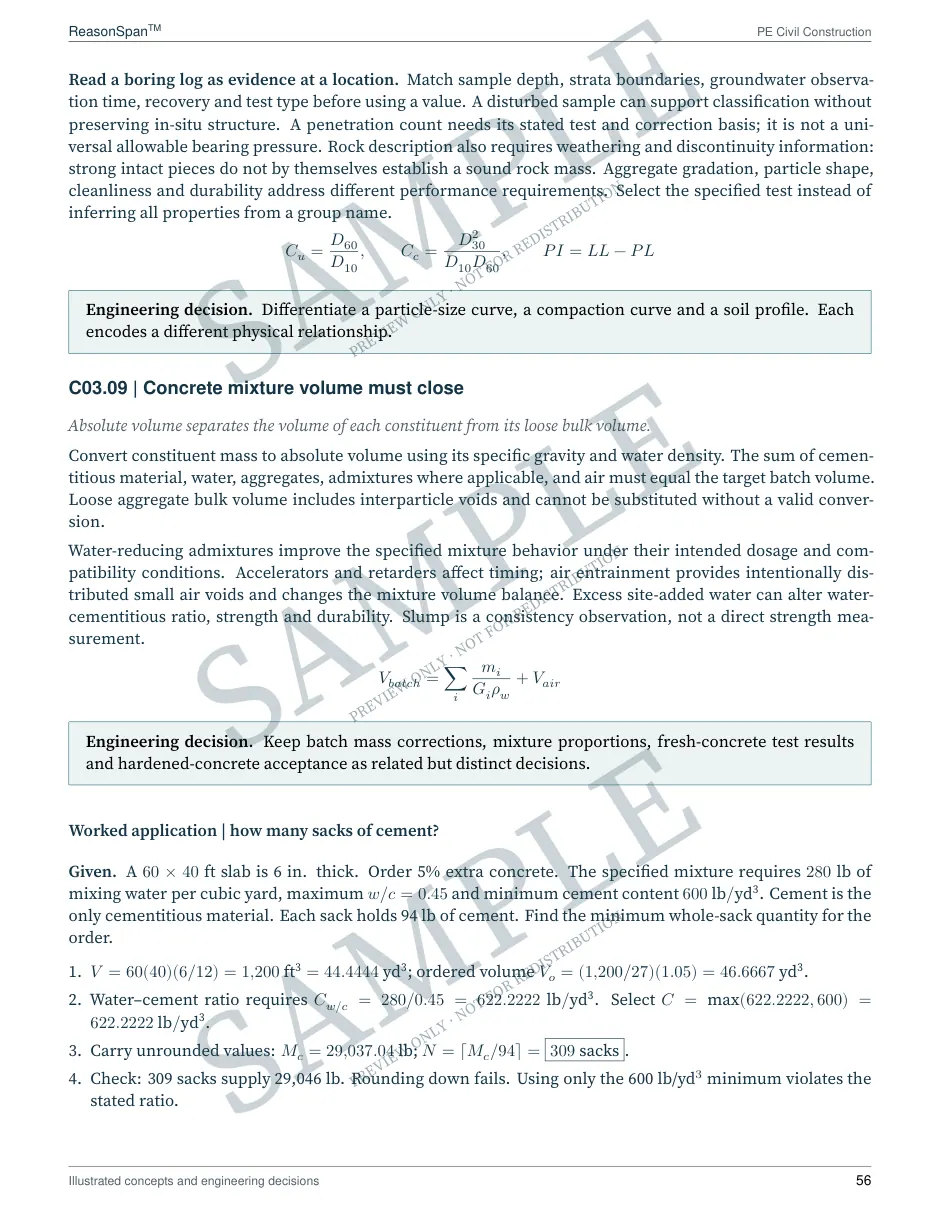
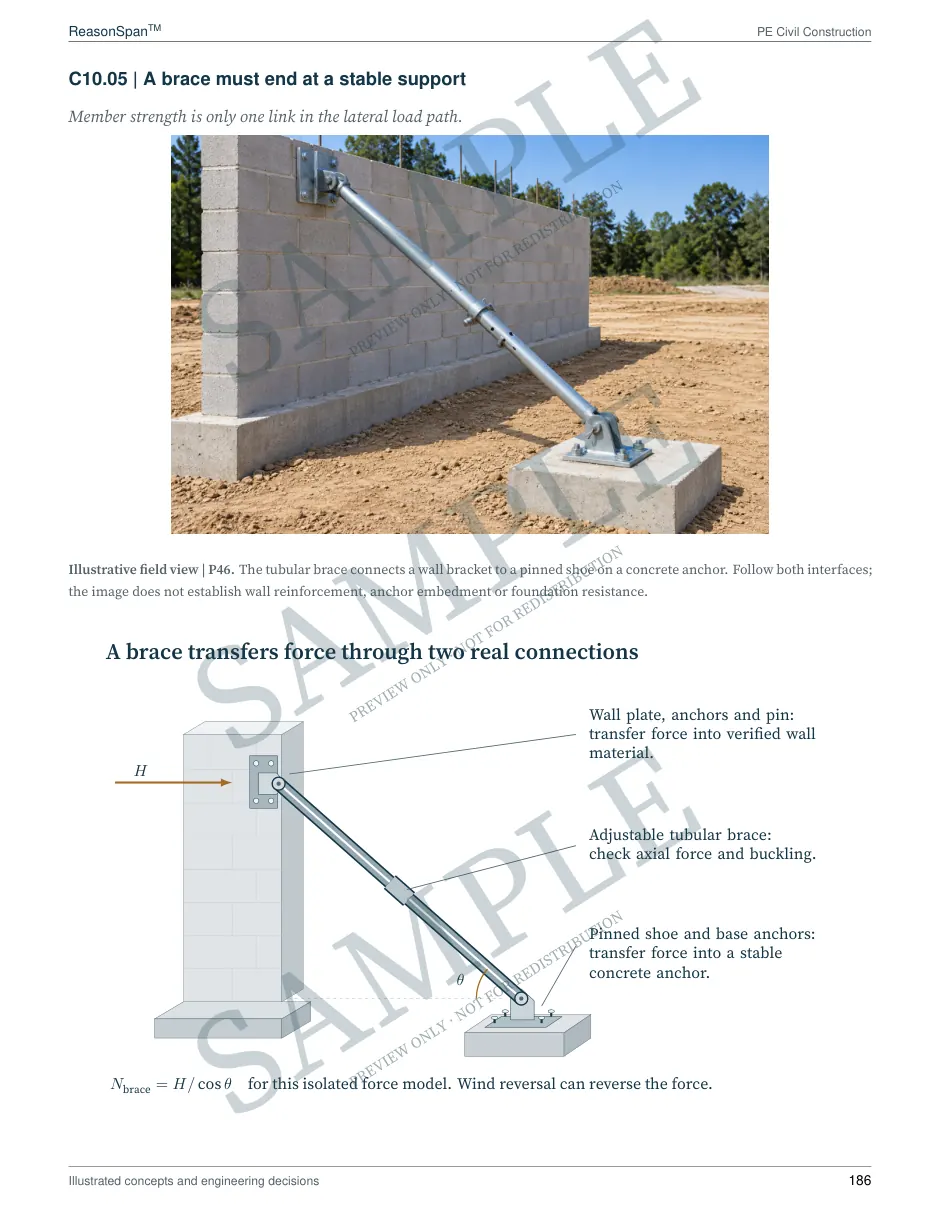
Read in the format that fits your study
Explore the book on Amazon
Illustrated theory, original worked applications, explained practice and the ReasonSpan™ Decision Compass. Preview actual pages before choosing your format.
PE Civil Construction
Exams through March 31, 2027
PE Civil Construction
Exams from April 1, 2027 onward
Amazon editions and the personalized PDF sold here are separate purchases. Online-program access is sold separately. Your exam date determines the Civil edition. Your conceptual preparation carries forward; update reference-dependent practice if your date changes. You do not need both editions.
PE Architectural Engineering: connect the building systems
Follow Electrical Systems, Mechanical Systems, Structural Systems and Project Administration through illustrated theory and worked decisions. The book includes 24 chapter questions, 24 conceptual questions, 52 workshops, 40 mixed decisions, an integrated case and 60 Decision Compass routes.
The selected pages below demonstrate a worked mechanical application and mixed-air reasoning. Open them at full size to inspect the equations and takeaway panels. This edition follows the October 2026 specification; confirm the assigned references for your appointment.
Actual pages from the book
Look inside before you choose.
Inspect the diagrams, worked reasoning and takeaway panels. Open a page to read it at full size.
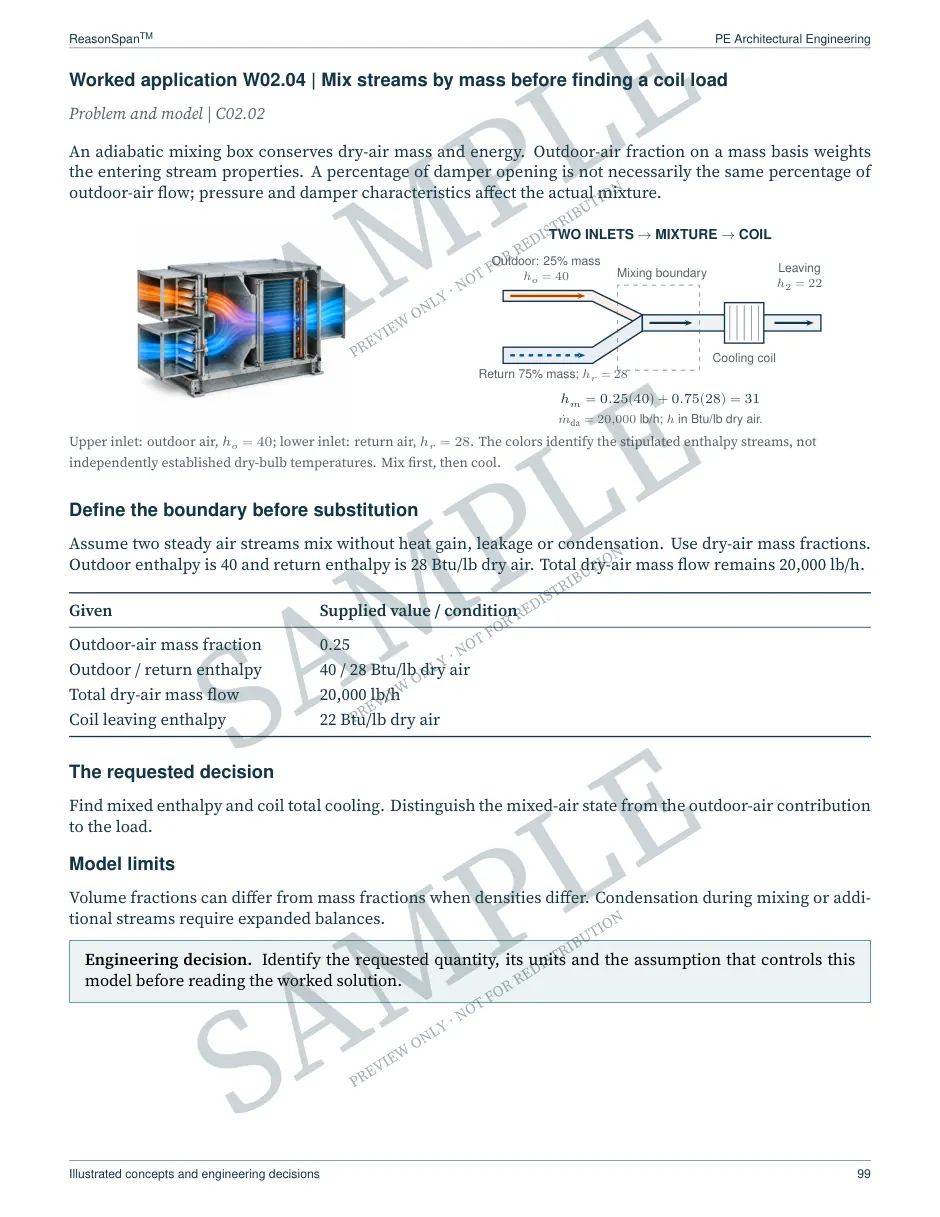
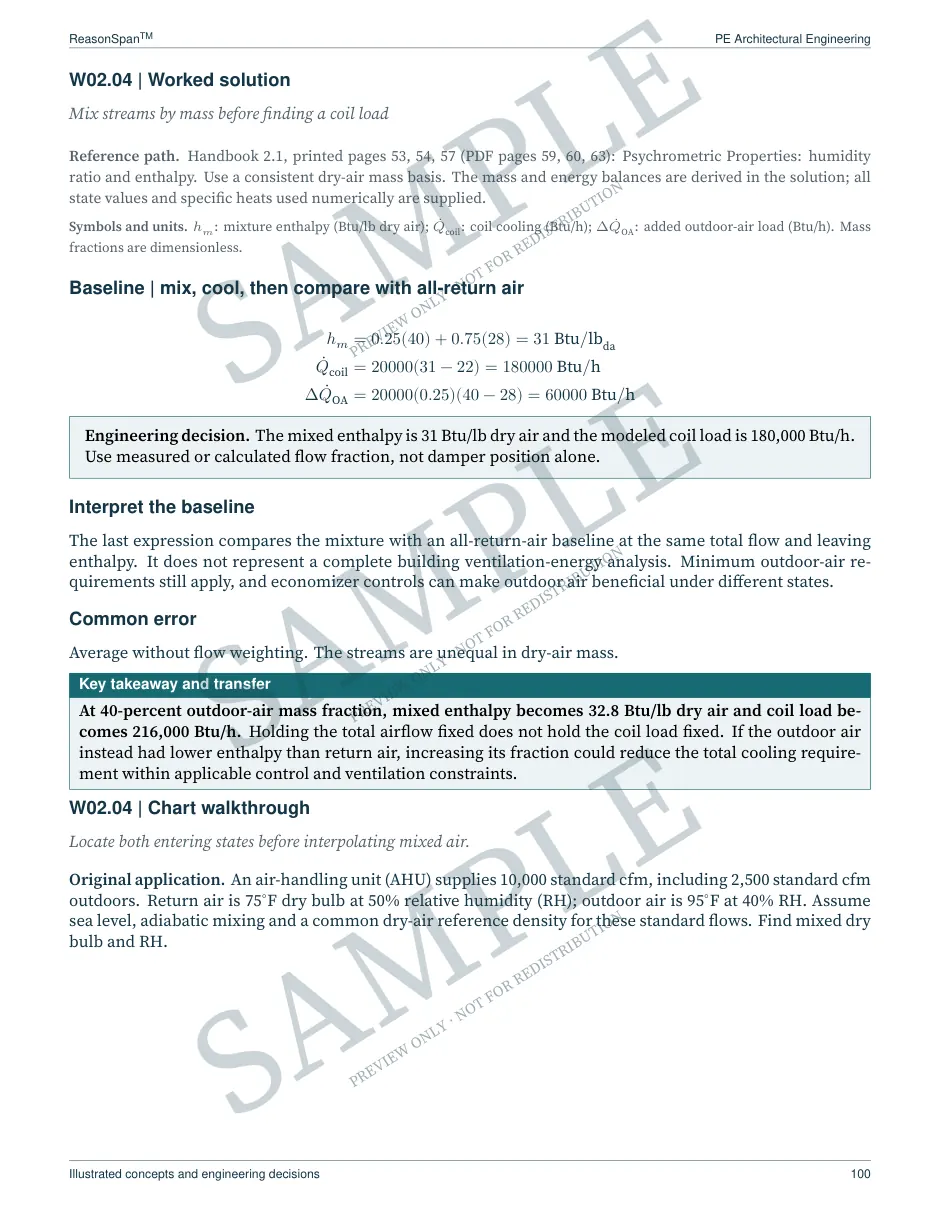
Read in the format that fits your study
Explore the book on Amazon
Illustrated theory, original worked applications, explained practice and the ReasonSpan™ Decision Compass. Preview actual pages before choosing your format.
PE Architectural Engineering
October 2026 specification; confirm the basis for your exam
Amazon editions and the personalized PDF sold here are separate purchases. Online-program access is sold separately.
A useful starting point for a first attempt or retake
For a first attempt, build the model before practicing under time pressure. For a retake, identify why an answer failed before repeating more questions. In either case, check understanding on a different problem instead of relying on recognition of a familiar answer.